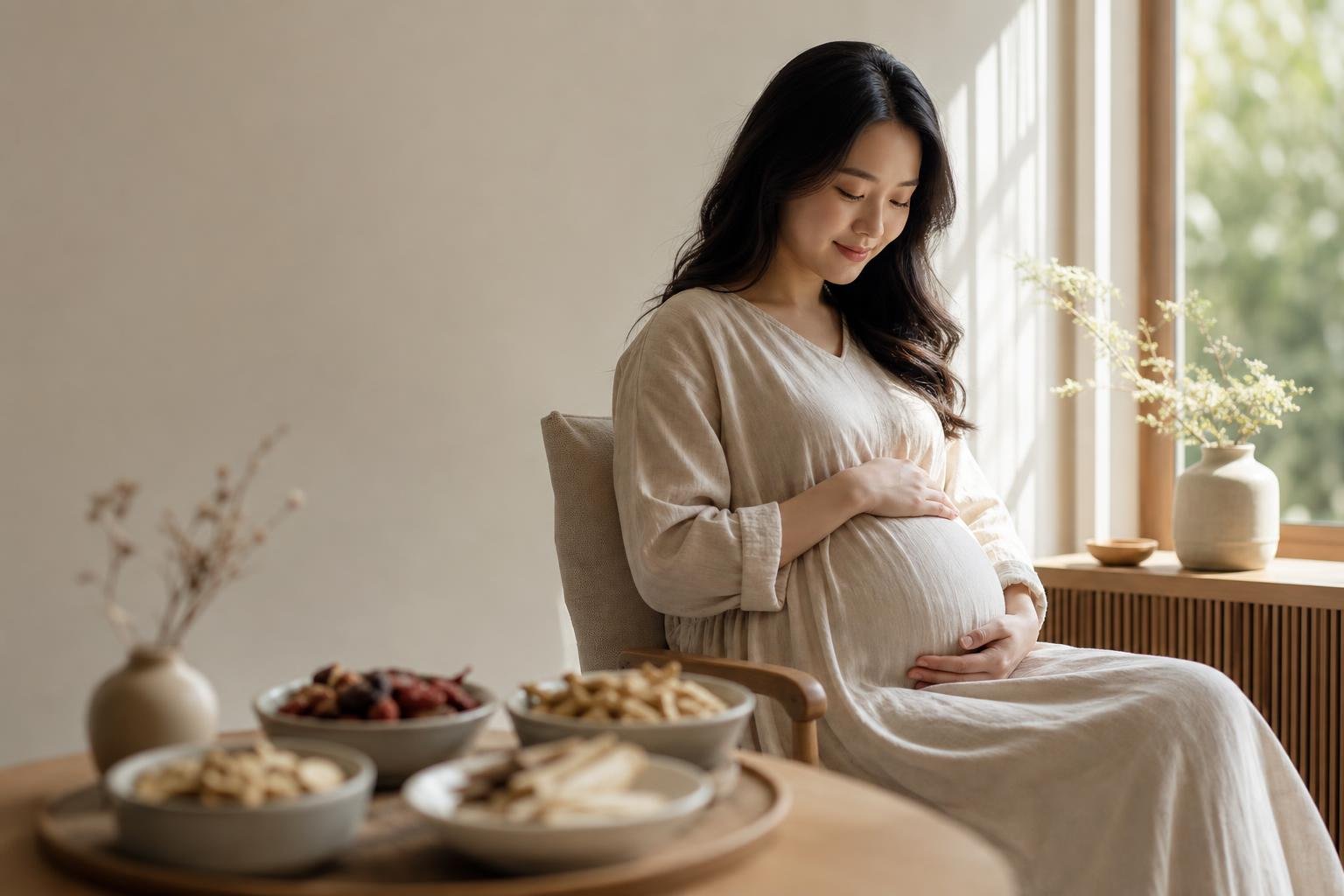

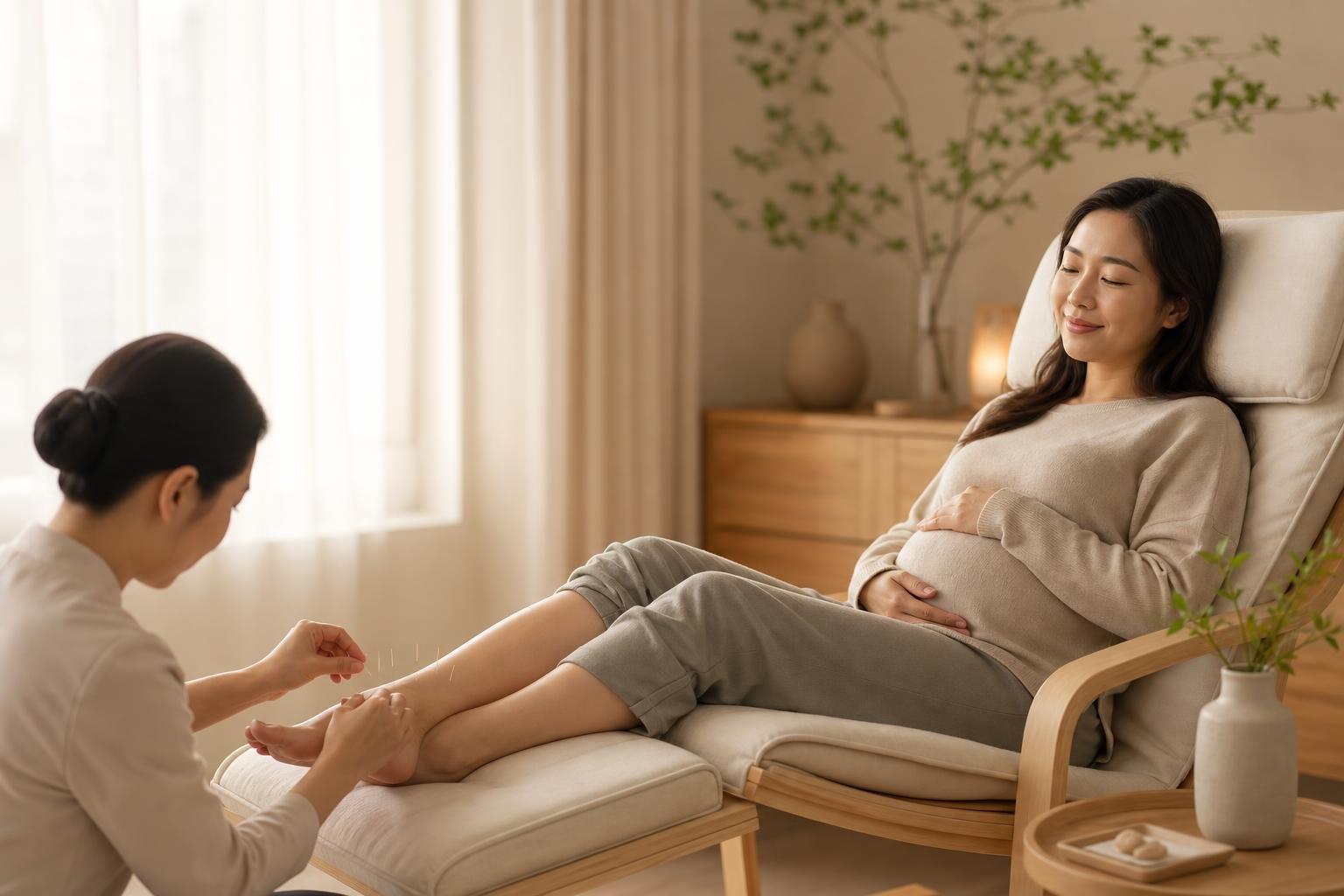

If you are pregnant and wondering, is acupuncture safe during pregnancy?, you are asking exactly the right question. The reassuring answer is that for most mums-to-be, acupuncture is gentle and low-risk when it is done by a trained physician who knows you are expecting and avoids the points traditionally held back for labour. It is one of the most popular drug-free ways to ease pregnancy aches, nausea, and poor sleep. This guide explains what acupuncture during pregnancy can help with, which areas of the body are used and which are avoided, what a session actually feels like, and when to be extra careful. For the bigger picture of looking after yourself while expecting, see our pregnancy care guide.
Is acupuncture safe during pregnancy?
Acupuncture is the placing of very fine needles at specific points on the body to ease symptoms and help you feel more balanced. Used sensibly, it has a long, gentle track record in pregnancy. The safety really comes down to one thing: who is holding the needles.
In the hands of a registered TCM physician (a Traditional Chinese Medicine practitioner trained and licensed to treat patients), acupuncture during pregnancy is considered safe and well tolerated. The physician chooses points that are suitable for your stage of pregnancy and deliberately steers clear of a small group of points that are best left alone until you are full-term. That careful point selection is the whole reason a qualified pair of hands matters.
Why “during pregnancy” is different from before
Many women first meet acupuncture when they are trying to conceive. Treatment during an established pregnancy is a different job. The goal is no longer to support conception; it is to keep you comfortable and settled while your baby grows. That changes which points are used and how gently your physician works. So even if you had acupuncture before falling pregnant, always tell your physician you are now expecting, and how many weeks along you are, before every session.
The golden rule for safe acupuncture in pregnancy
If you remember nothing else, remember this:
- See a registered physician, not an untrained needler or a home kit.
- Say you are pregnant and give your week count at every visit.
- Keep your gynae in the loop and never skip your antenatal appointments.
- Never DIY. Self-needling, or copying points from a video, is not safe in pregnancy.
What acupuncture can help with during pregnancy
Pregnancy brings a string of small, draining complaints that are rarely dangerous but can really wear you down, and many have few medicine options you feel comfortable taking. This is where acupuncture earns its place. Think of it as comfort care, easing day-to-day symptoms while your medical team looks after the pregnancy itself.
Nausea and morning sickness
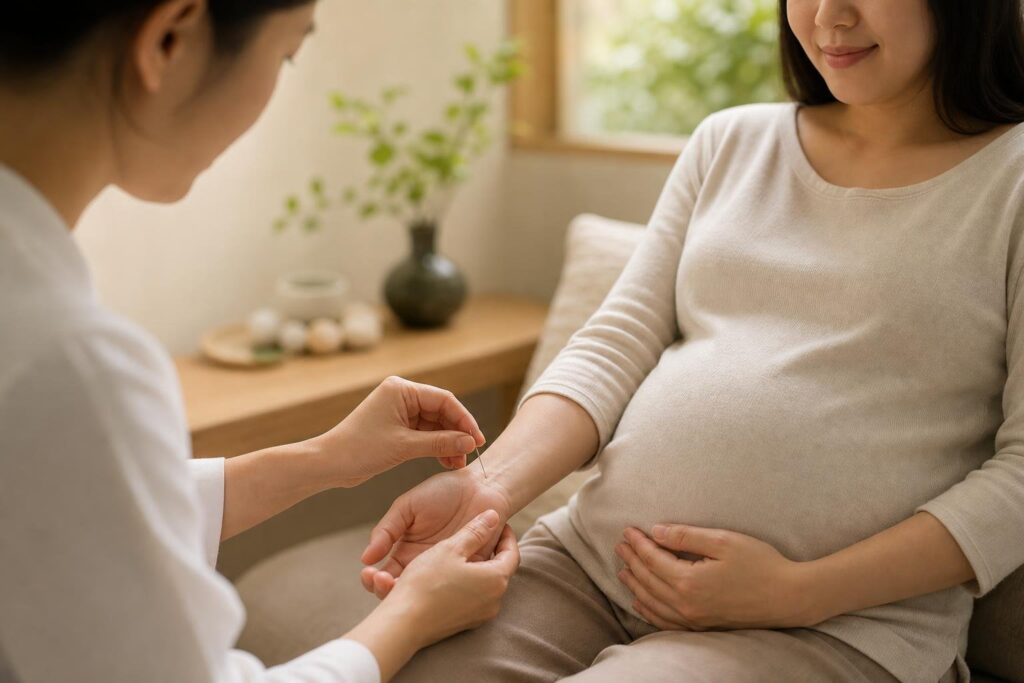
Easing nausea is one of the most common reasons mums try acupuncture, often using a well-known point on the inner wrist. Many women already know this spot from the travel-sickness bands sold at pharmacies. Acupuncture and acupressure (firm finger pressure on a point instead of needles) are both gentle ways to settle a queasy stomach early on. Our first-trimester survival guide has more tips.
Back, hip, and pelvic pain
As your bump grows and your ligaments soften, aches in the lower back, hips, and pelvis are very common, especially from the second trimester onwards. Acupuncture is widely used to ease this kind of muscular and joint pain without medication. It pairs well with hands-on treatment, and our pregnancy pain management service focuses on exactly these complaints. For tired, achy muscles more broadly, some mums also add gentle prenatal massage.
Sleep, stress, and low mood
Pregnancy can leave you wired and tired at the same time. Many mums find acupuncture deeply relaxing, and a calming session can help with restless sleep, racing thoughts, and everyday anxiety. The quiet rest time on the treatment couch is part of the benefit.
Labour preparation and breech
In the final weeks, the focus shifts towards birth:
- Pre-birth acupuncture: some physicians offer a short course in the last few weeks to help the body get ready for labour. This is only ever done close to full-term and under professional guidance.
- Breech baby: when a baby is bottom-down late in pregnancy, a traditional approach is moxibustion (gentle warming of a point with a smouldering herb stick rather than a needle) at a point on the little toe, usually tried around weeks 34 to 36. It must be guided by a physician, never attempted alone.
Which points are used, and which are avoided
This is the part most mums worry about, so let us make it simple. Your body has hundreds of acupuncture points. During pregnancy, most of them can be used safely. A small handful are traditionally avoided until you are full-term because they are considered too stimulating and are associated with encouraging contractions.
You do not need to learn or memorise any of this. Choosing safe points and working around the ones to avoid is precisely what your physician is trained to do. The list below is just so you understand the thinking, not so you can self-treat.
Points commonly used in pregnancy
- The inner wrist point often used to calm nausea and settle the stomach.
- Points on the back and limbs chosen to ease aches, tension, and pain.
- Calming points selected to help with sleep, stress, and low energy.
These are gentle, supportive choices that suit the comfort-care goal of pregnancy treatment.
Points usually avoided until full-term
A few areas are generally kept off-limits until your due date is near, because they are traditionally linked with stimulating labour. These include certain points on the lower leg and ankle, a point in the web of the hand near the thumb, a point high on the shoulder, and the little-toe point used for breech work. Your physician simply leaves these alone for most of your pregnancy and may only use one near full-term if pre-birth or breech support is appropriate. Again, the takeaway is not the names; it is that a trained physician already knows to avoid them.
Why a trained physician matters, and why DIY does not
Because the line between a helpful point and one to avoid depends on your exact stage of pregnancy, this is not something to attempt at home. Please do not self-needle, ask an untrained person to treat you, or press firmly on points you found online without checking first. A registered physician weighs your week count, symptoms, and health history before placing a single needle. That judgement is the safety net, and it cannot be copied from a video.
What an acupuncture session feels like
If the idea of needles makes you nervous, you are far from alone. The good news is that the experience is usually calm and surprisingly comfortable.
The needles and the sensation
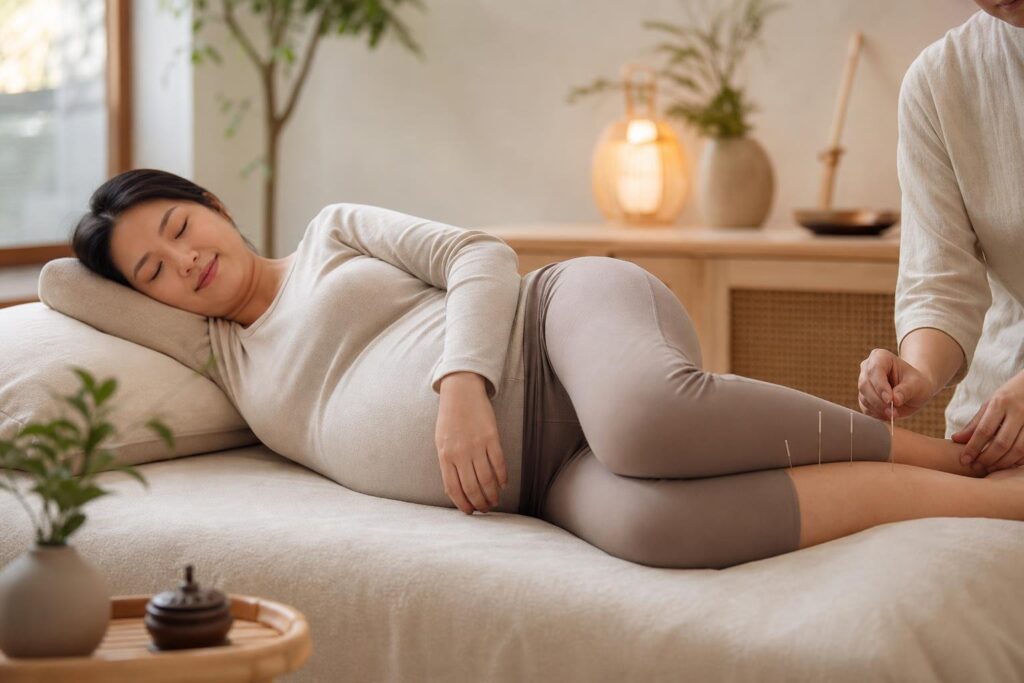
Acupuncture needles are extremely fine, far thinner than the needles used for injections or blood tests, and nothing is injected. Most mums feel only a tiny prick when a needle goes in, if they feel anything at all. After that, you may notice a dull, heavy, or tingling feeling around the point, which many people find oddly relaxing. Once the needles are in, you simply rest for around 20 to 30 minutes while they do their work.
Positioning and comfort while pregnant
As your bump grows, lying flat on your back for long stretches is not ideal. A good physician will settle you on your side or propped up with pillows so that blood flow and comfort are protected. Speak up the moment anything feels off, and the physician will adjust.
What your first visit looks like
A first pregnancy visit is relaxed and conversational. Your physician will ask about your due date, symptoms, sleep, digestion, and energy. They may gently check your pulse and look at your tongue, traditional ways of reading how your body is doing. From there they suggest a gentle plan, explain which points they intend to use, and answer any questions before starting. Nothing is rushed, and you are always free to say no.
How often will you go?
There is no fixed number of sessions. For an ongoing issue like morning sickness or back pain, a short weekly course often helps, then you ease off as you feel better. For a one-off concern, a couple of sessions may be enough. Your physician will suggest a plan and adjust it as your pregnancy moves along, and you are never locked in.
When to be extra cautious
Acupuncture is gentle, but a few situations call for extra care and a clear chat with both your physician and your doctor first:
- A history of miscarriage, bleeding, or spotting: mention this straight away so treatment stays especially light.
- A high-risk or closely monitored pregnancy: check with your gynae before starting.
- Placenta concerns, pre-eclampsia, or other diagnosed conditions: get medical clearance first.
- Feeling unwell during a session: dizziness, faintness, or strong discomfort means stop and tell your physician.
And always treat acupuncture as a support, not a substitute. Contact your doctor or go to hospital for warning signs such as vaginal bleeding, severe or constant tummy pain, a bad headache with vision changes, a high fever, or your baby moving much less than usual. When in doubt, get checked.
How acupuncture fits with your antenatal care
The best results come when TCM and your medical care work together. Acupuncture is good at easing the everyday discomforts of pregnancy and helping you feel calmer and more rested. It does not replace your scans, blood tests, or your doctor’s advice.
Keep both teams informed: tell your physician about any medicines and supplements you take, and tell your gynae that you are having acupuncture. For families looking for acupuncture during pregnancy in Singapore, choosing a registered clinic that treats expectant mums every day, and that coordinates with your antenatal care, is the surest way to get the comfort without the worry.
Frequently asked questions
Is acupuncture safe during pregnancy?
For most mums, yes, when it is performed by a registered physician who knows you are pregnant and avoids the points reserved for labour. Always give your week count before every session, and keep your gynae informed.
Can acupuncture cause a miscarriage?
When done correctly by a trained physician using safe points, acupuncture is not considered to cause miscarriage. The concern comes from a few specific points that are deliberately avoided until full-term, which is exactly why professional, qualified care matters and DIY does not.
Does acupuncture hurt, especially with a bump?
Usually not. The needles are very fine, so most mums feel only a tiny prick, if anything. Your physician will position you comfortably on your side or propped up, so your bump is never a problem.
When can I start, and is the third trimester too late?
You can start at any stage, and the third trimester is not too late. Many mums begin late for back pain, swelling, breech support, or labour preparation. Just tell your physician how far along you are.
How many sessions will I need?
It depends on your symptoms. Ongoing issues often respond to a short weekly course, while a one-off concern may need only a couple of visits. Your physician will tailor a plan and adjust it as you go.
Can I do acupressure on myself at home instead?
Only with your physician’s guidance. Some gentle points, like the wrist point for nausea, may be fine to press, but several points are avoided in pregnancy. Always check before pressing firmly on any point, and never self-needle.
Looking for gentle, professional acupuncture through your pregnancy? Our physicians treat mums-to-be always work within safe limits. Explore our pregnancy care options and book a relaxed first chat to see how acupuncture could help you feel more comfortable.